Distance
About 290 km each way from Da Nang, over the Hai Van Pass and along QL9.


Lao Bao border route
The Lao Bao border crossing sits in Quang Tri province, about 290 km west of Da Nang on the Vietnam-Laos border, a 4.5 to 5.5 hour drive each way over the Hai Van Pass and along QL9. Vietnam's side is posted as open daily from 07:00 to 22:00, while the passenger immigration desks in practice run about 07:00 to 19:00. Runs from Da Nang reach the border between 10:30 and 11:30 and re-enter Vietnam the same day.
Lao Bao is the main land border used for visa runs from Da Nang and much of Central Vietnam. This page focuses on what actually happens at the border so travelers know the sequence, where delays happen, and why the exit stamp is so important.
For travelers starting in Da Nang, Lao Bao is usually the most practical border run route because it serves Central Vietnam better than the southern border options. It is a long drive, but it is the standard choice when the goal is to leave Vietnam, handle the visa process, and return on the same day.
Two things decide how the day ends: what time you reach the counter, and whether the paperwork is complete before the passport goes over it. Everything else is the drive.
The Lao Bao crossing involves the Vietnam side first and the Laos side second. You leave Vietnam, receive the exit stamp, then handle the Laos side according to your nationality and your border-run arrangement. After the new Vietnam visa is ready, you return to the Vietnam checkpoint for re-entry.
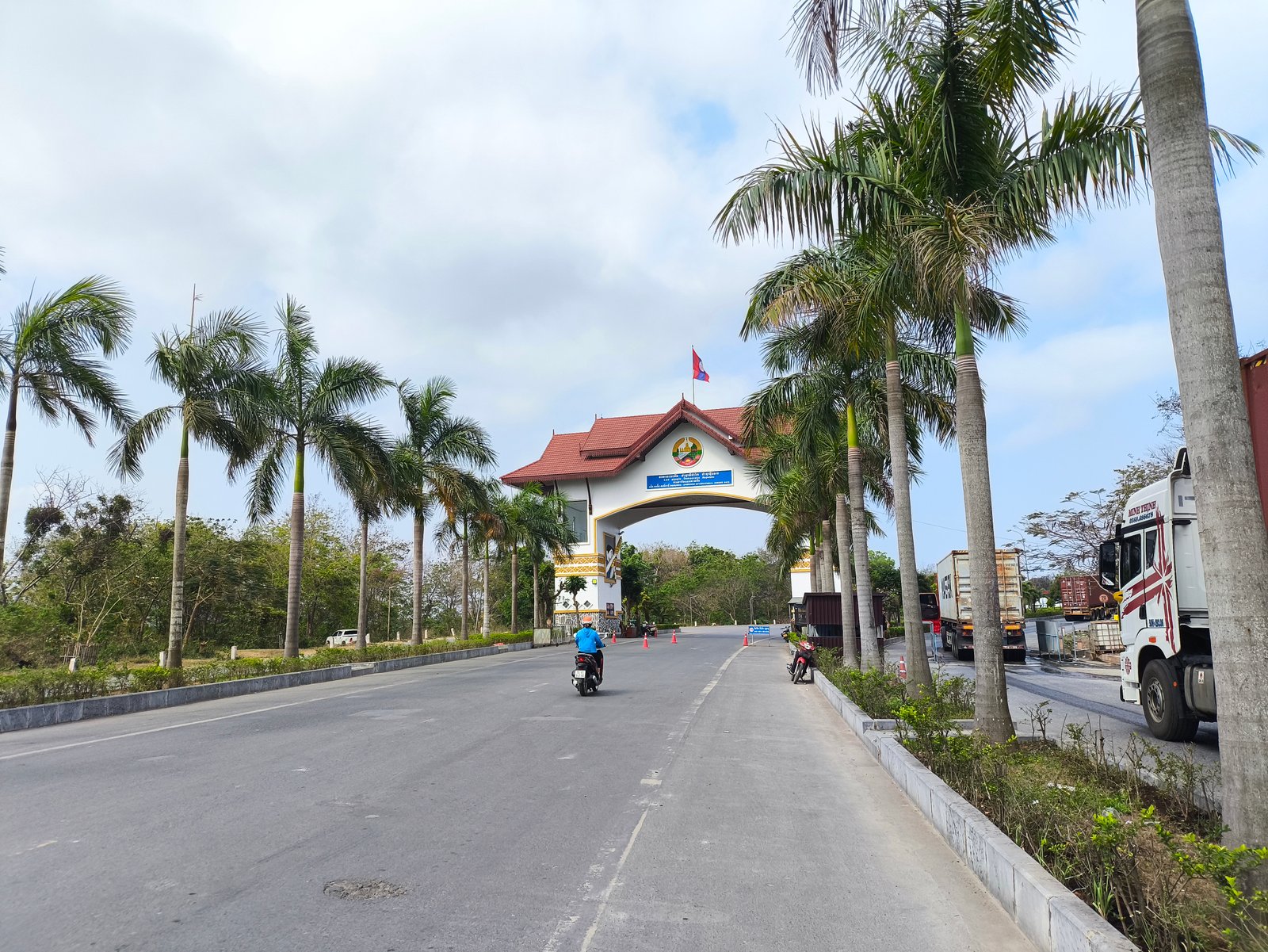
Keep your passport, phone, and any visa-related messages ready before you step into the immigration area. This reduces confusion at the counters.
Health control is the one border topic people ask about most in 2026. The short version: the declaration rule exists in law but is not switched on for travellers, and the detail is on the health declaration page.
Go through Vietnam immigration and wait for the passport to receive the exit stamp. Check the stamp is visible and readable before walking away.
Do not delay this step. A blurred photo, a late photo, or a missing photo can push back the visa process and delay the whole return schedule.
Some travelers need a Laos visa on arrival and some do not. This depends on nationality. If there is any doubt, confirm it before the trip rather than trying to solve it at the border.
There are usually small shops or simple waiting points near the crossing. The main variable here is visa timing, not the physical crossing itself.
Once the new visa is ready, return to the Vietnam immigration side, present the required documents, and complete legal re-entry.
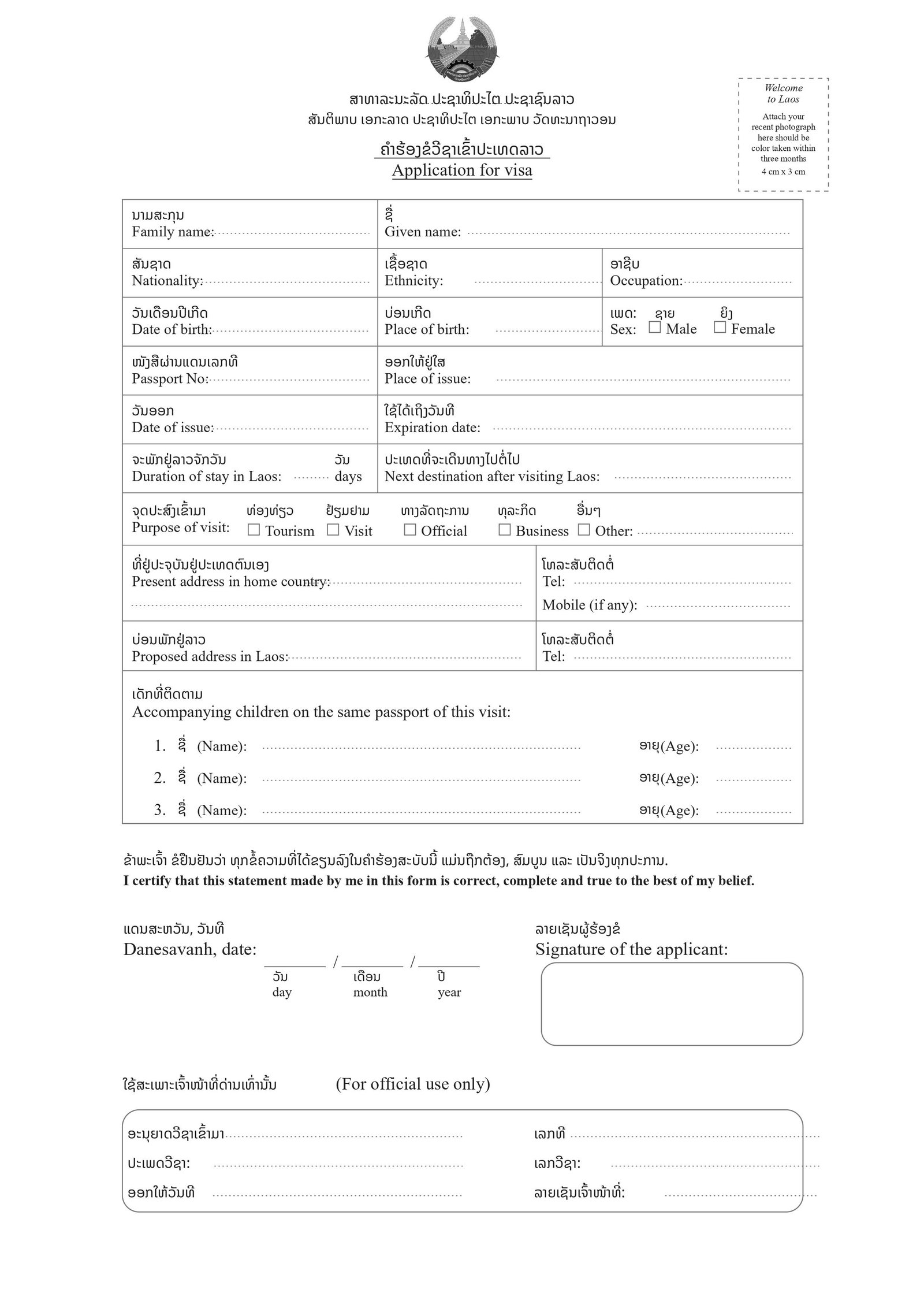
If you need the Laos visa on arrival paperwork, this is the application form used at the border. You can preview it below or download it directly.
Travelers often assume the border itself is the slow part. Usually it is not. The key wait is the period after exit, while the new visa is being handled. That means the biggest timing advantage comes from clean preparation, fast stamp sending, and weekday processing windows.
A typical Da Nang to Lao Bao visa run aims for morning arrival, stamp handling soon after arrival, re-entry in the afternoon, and return to Da Nang later the same day.
What that looks like in clock time depends on when your van leaves. The first pickups out of the city are the ones that arrive before the mid-morning rush at the counter, which is the difference between an afternoon re-entry and a long wait: see the departure and pickup times before you choose a day. If you would rather not share the vehicle at all, the same route runs as a private car and can leave at whatever hour suits you.
The crossing itself is open daily from 07:00 to 19:00 Vietnam time for passenger traffic. Same-day runs from Da Nang normally reach the border between 10:30 and 11:30, which leaves ample room before the quiet stretch in the mid-afternoon.

Mobile signal near the Lao Bao border can be unstable. Travelers should charge the phone fully before departure, bring a cable and power bank, and be ready to use local Wi-Fi if the mobile connection is weak. Good communication during the stamp and visa stage makes the trip much smoother.
The road is the long part, not the border. The crossing is a walk of a few hundred metres. The eight hours on either side of that walk are what fills the day, and knowing how they usually fall is what stops a run feeling like a gamble.
Two things decide which end of that range you land on: what time the van reaches the counter, and whether the paperwork was complete before the passport went over it.
Lao Bao and Densavan are one international crossing with a border line through the middle of it. The Vietnamese building does your exit in the morning and your re-entry in the afternoon, so you will stand at the same counters twice in one day, with a few hundred metres of walking between the visits.
The order never changes. Passport and exit stamp on the Vietnamese side, then the walk across to the Laos building for entry, then the wait, then the walk back for re-entry. The Laos stop is short either way: ten to twenty minutes when the passport needs a visa on arrival, less when it does not.
One detail catches people out: the gate is posted as open from 07:00 to 22:00, but the passenger immigration desks run about 07:00 to 19:00. Those three hours are not a passenger window, and a van that reaches the border after 17:00 has a problem the gate sign does not advertise. A run that arrives at 10:30 has the whole passenger day ahead of it.
Cash matters more here than anywhere else on the trip. The border restaurants take dong and nothing else, the Laos visa window takes dollars and nothing else, and there is no ATM at the crossing. The last machines before the border are back toward Dong Ha.
This crossing issues a Laos visa on arrival at the window. A Laos e-visa is not accepted here, so do not buy one for a land run. The window is the only route.
The steps are short. Fill the arrival form, which is the same one previewed further up this page and available to download before you travel. Hand over passport, form and photo. Pay the fee in cash. Wait at the counter while the visa goes into the passport.
Keep the entry stamp and any slip the window hands you inside the passport. The Laos exit desk asks for it on the way back, and a run day gives you no time to be sent to another counter to reconstruct it. Then turn around and walk back to the Vietnamese building, where your re-entry stamp waits on the visa work being finished.
Almost nothing that goes wrong at Lao Bao is dramatic. It is bureaucratic, and it is expensive in hours rather than money. These are the four failures that turn a 12 hour day into a two day trip.
Passenger immigration stops around 19:00. If the approval lands after that, the van cannot wait and the border will not stay open, so the night goes one of two ways: a guesthouse in Lao Bao town for a few hundred thousand dong, or a room in Savannakhet on the Laos side and a morning re-entry. Rare, but it is the reason weekday runs are safer than weekend ones. Fast cases are handled in about four hours when the offices are working.
An e-visa is issued for a specific port, and Lao Bao has to be the one printed on it. Turn up with a different port and the officer has nothing to stamp you back in on, the fee is not refunded, and the fix is a fresh application. The entry port page covers which field to pick and how to correct one.
The exit stamp is what starts the visa work, so a blurred photo, a photo with the page number cut off, or a photo sent two hours late moves every later step back by the same amount. Take it in daylight, flat on the page, before you leave the counter.
No cards at the border, and the Laos window wants dollars. A run can stall over a 50,000 dong photo fee or a 30 dollar visa because the nearest ATM is a long way back toward Dong Ha.
One thing worth saying plainly: if your passport holds a 45 day exemption or an ASEAN stamp on both sides of the crossing, nothing above is really a visa problem for you. It is a long drive, a walk, and a fresh stamp, and the paperwork side of a paid run adds little. Overstaying is the exception, and that is its own conversation, because the fine is settled before you are allowed to exit and the overstay page has the brackets.
About 290 km each way from Da Nang, over the Hai Van Pass and along QL9.
4.5 to 5.5 hours each way, with one comfort stop.
Open daily 07:00 to 22:00, Vietnam time.
About 07:00 to 19:00. The three hours after that are not a passenger window, whatever the gate sign says.
10:30 to 11:30 for a same-day van out of Da Nang.
10 to 12 hours door to door, back in Da Nang the same evening.
Densavan, a few hundred metres across the line, reached on foot. Visa on arrival 30 to 40 USD in cash for most passports.
50,000 to 100,000 VND a head, cash only, at the restaurants in Lao Bao town.
A same-day run is two drives with a border sitting in the middle of them, and the drives are what fill the day: out of the city before dawn, at the counter by late morning, home the same evening. Each stretch of the road has a job in that timetable, and it runs in the same order every time.
The van collects across Da Nang inside this window. A Hoi An pickup sits earlier in it than a city one, because the detour is real and the drive afterwards is exactly the same length. Charge the phone before you sleep. The exit stamp photo is the first thing the day asks of it, and it asks in the sun.
Out of the city the road is QL1A, then Hai Van: over the pass, or through the tunnel cut under it. The pass is the slower of the two and the one with the view. The tunnel is what a driver takes when the timetable is the point of the trip. Either way the coast road picks up again at Lang Co, and Hue's southern edge follows before the road turns for Quang Tri.
Dong Ha is the last town before the gate with anything useful in it: fuel, a shop, a working cash machine. Between it and the border there is nothing, and nothing at all on the Laos side, which is worth remembering on the day the cash runs short.
Past Dong Ha the road turns west onto QL9 and the country changes fast: Cam Lo, then the Dakrong bridge, then the Truong Son foothills, where the road starts to climb and the Khe Sanh country opens out around it. This is the stretch where the van stops for the halfway break, usually a roadside place with coffee and a bathroom, and it is the last point worth checking a phone. Further on, signal is a matter of where the road happens to be sitting.
The return is the same road in the other direction and it takes the same 4.5 to 5.5 hours. It feels longer, because the interesting part of the day is behind you and the light is going the wrong way. Rain on the pass and the order the van drops people off can both stretch that last hour. Door to door a clean run is 10 to 12 hours, and an early start does not make the drive back any shorter.
That depends on your nationality and the route handling for your case. Some travelers complete a straightforward border loop, while others need Laos visa on arrival.
Yes, especially for travelers in Central Vietnam, but urgent cases depend on clean document handling and weekday timing.
Yes, but the risk is not the road. The risk is mis-timing the visa process, misunderstanding the border flow, or losing time after exit.
The gate is posted as open daily from 07:00 to 22:00 Vietnam time, but passenger immigration runs about 07:00 to 19:00. Arriving after 19:00 means the desks are closed even though the gate is not, so a same-day run from Da Nang aims to be at the border by 10:30 or 11:30 and back through before the afternoon thins out.
Only if you hold a sponsored visa such as DL, DN, LD or DT. E-visa and visa exemption holders cannot extend in Vietnam at all, which is why the run exists. The Da Nang immigration office guide covers who qualifies and who gets turned away.
Last updated: 28 October 2026
